

Last Updated: February 2026
We periodically revisit our reviews to ensure information reflects current firmware, pricing trends, and availability.
Introduction
You’ve probably noticed how much more capable budget active noise-canceling (ANC) headphones have become. What used to be a premium-only feature is now widely available at prices that won’t make you wince. In 2026, budget ANC models deliver meaningful reduction of everyday noises, long battery runtimes, and companion apps that let you tune sound to your taste. Still, you’ll get varying results depending on the design, component choices, and software support. This guide explains what you can realistically expect from budget ANC headphones today, what to prioritize when shopping, and how to avoid common disappointment.
👉 How we test
If you want to understand how we evaluate comfort, ANC accuracy, and long-term durability, see 👉 How We Test & Review Products.
Who This Guide Is For
This guide is designed for commuters, remote workers, students, and casual travelers who want effective noise reduction and long battery life without paying flagship prices. If you value comfort, usability, and real-world performance over luxury materials and maximum ANC strength, budget models in 2026 are well worth considering.
How We Evaluate Budget ANC Headphones
At TopProdReviews, we evaluate budget ANC headphones based on real-world usability rather than marketing promises. Our comparisons focus on how products perform during commuting, home office work, travel, and long listening sessions.
We pay particular attention to:
• how consistently the ANC reduces steady environmental noise
• comfort after several hours of wear
• how useful the companion app is in everyday adjustments
• battery behavior across normal daily routines
• firmware reliability and connectivity stability
Instead of chasing laboratory perfection, we look for practical improvements that most listeners will notice immediately.
What “Budget ANC” Really Means in 2026
When you shop in the budget ANC category in 2026, you should expect practical performance rather than perfection. Most affordable ANC headphones are engineered to reduce low-frequency, steady noises like airplane hum, train rumble, and HVAC systems. Those are the sounds that eat away at comfort on commutes and during flights, so manufacturers focus on them first.
That said, budget ANC still struggles with nearby conversations, sudden clanging, or very high-frequency city noise. You shouldn’t expect absolute silence—those kinds of results still require flagship designs with sophisticated hybrid ANC, advanced microphones, and more processing power. Instead, expect a noticeable reduction in background hum, fewer distractions, and a much more comfortable listening experience for everyday use.
If you’re still deciding which features actually matter, this guide on what to look for when buying budget noise-canceling headphones breaks down the key trade-offs before you choose.
Real-World Performance vs Marketing Claims
Manufacturers often advertise dramatic noise-reduction percentages or phrases like “near total silence.” In everyday environments, results are more nuanced.
What most users experience is a reduction in fatigue. Engine rumble becomes softer, air conditioning fades into the background, and you don’t need to raise volume as much. Conversations and sudden sounds still break through.
Understanding this difference between laboratory measurement and daily experience helps prevent disappointment and leads to better purchase decisions.
Important disclaimer: Bluetooth and region differences
Technical features you read about—Bluetooth codecs, multipoint pairing, and app behavior—can vary by device, region, and firmware version. If a spec matters to you (for example, aptX Adaptive, LDAC, or LE Audio/LC3 support), verify the current specifications for the exact model and firmware you plan to buy. Manufacturers sometimes ship different versions for different markets.
Key Features That Matter Most
Noise cancellation quality
Noise cancellation is the headline feature, and for good reason: it determines whether the headphones actually make your commute or workday more pleasant. In budget models, ANC quality is generally tuned to reduce steady, low-frequency noise rather than aggressively snuff out every audible distraction. What you want to look for is consistent performance—heads that don’t fluctuate wildly and that handle airplane engine hum, bus rattle, and HVAC fan noise without becoming noisy themselves.
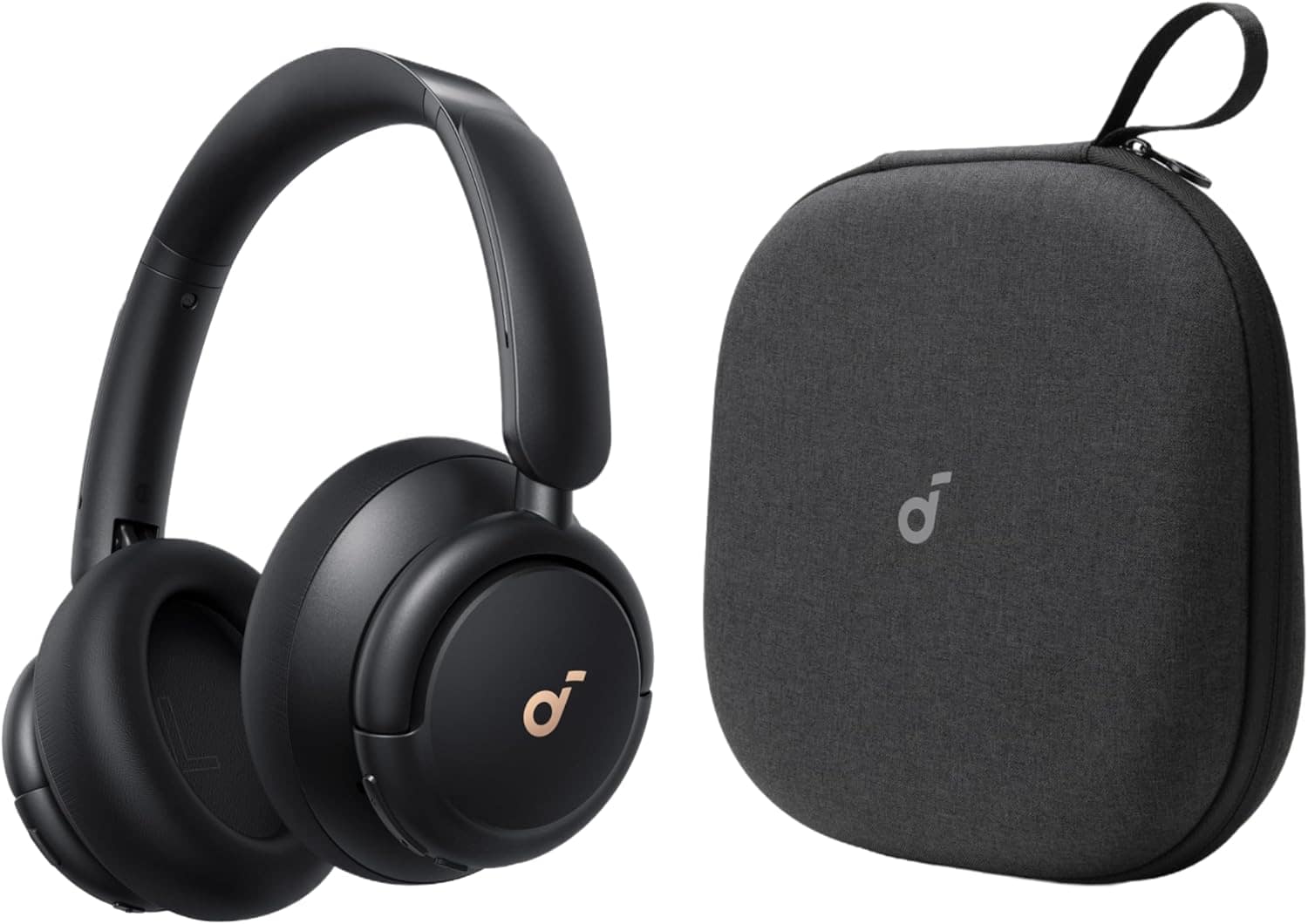
ANC systems can be tuned conservatively to avoid pumping or unnatural artifacts, and that’s usually a positive sign in the budget market. If the marketing promises ‘perfect silence,’ temper your expectations—in real-world tests, budget ANC always involves trade-offs. A good example of how these compromises play out is explained in our Soundcore Life Q30 review which looks at ANC performance, comfort, and battery life in a budget model.
Battery life
One place budget ANC headphones often shine is battery life. Because many affordable models use less power-hungry processors and focus on efficient ANC implementations, you’ll commonly find runtimes in the 30–60 hour range with ANC off, and 20–40 hours with ANC on. That kind of battery life is ideal for long commutes, multi-leg flights, and days when you don’t want to carry a charger.
Fast charging and USB-C have become standard, and many budget models offer hours of listening from a short charge. Don’t ignore idle power draw and standby habits—how the headphones handle Bluetooth reconnection and background wake events can affect real-world battery life more than headline numbers.


Comfort for long sessions
If you’re going to wear headphones for several hours, comfort matters more than premium materials. In the budget bracket, look for lightweight construction, soft ear cushions, breathable padding, and a moderate clamp force that’s secure without being tight. Head shape and earcup sizing vary widely, so what’s comfortable for one person may not be for another.
Durability and hinge design also matter if you travel with your headphones. You should prioritize fit and day-long comfort first—materials and finish can come later if you’re on a tight budget.
App support and EQ
A good companion app can transform budget headphones. With an app, you can adjust an EQ, enable or disable noise-canceling profiles, set behavior for transparency modes, and install firmware updates. Many budget models include adjustable EQ presets or even custom EQ curves that let you dial back boomy bass, tame sibilance, or add clarity to vocals.
If you’re someone who tweaks sound, buy headphones with a well-regarded app. If you don’t plan to use an app, prioritize inherently balanced tuning and comfort.
Bluetooth feature variability
Connectivity is a big area of variability. Some budget headphones still ship with basic SBC and AAC support, while better models include aptX, aptX Adaptive, LDAC, or even LE Audio/LC3 support. Multipoint pairing—connecting to two devices simultaneously—is common but not guaranteed, and implementations can be inconsistent.
If you want low-latency gaming performance, check whether the model offers a dedicated low-latency or “gaming” mode. If call quality matters, look for models with beamforming or multi-microphone systems. Before you buy, verify these features for your region and the specific production batch, because firmware updates or regional differences can change behavior.
ANC technology basics and what to expect
Feedforward, feedback, and hybrid ANC
Understanding the different ANC topologies helps you interpret what manufacturers are offering. Feedforward ANC uses external microphones to listen for external noise and cancel it; feedback ANC uses microphones inside the earcup to measure what your ear actually hears and corrects accordingly. Hybrid ANC combines both approaches for better overall performance.
In budget headphones, you’re most likely to see feedforward or simplified hybrid systems. They’re effective at the target task—reducing steady bass and mid-bass rumble—but they won’t match the adaptive, high-resolution cancellation found in high-end hybrids. In practice, that means good reduction of engines and HVAC noise, with less success on unpredictable, high-frequency disturbances.
Adaptive ANC and modes
Adaptive ANC—where the system adjusts based on your environment—is more common in premium models, but some budget headphones now include basic adaptive algorithms that tweak performance between low-power and stronger cancellation. Expect a few ANC modes like “ambient” or “transparency” to let outside sound in, and perhaps a couple of user-selectable profiles in the app.
Remember that transparency modes vary widely: some make speech natural and clear, while others can sound tinny or overly processed. Try the transparency mode if you plan to use it for street safety or conversations.

Sound quality expectations
Tuning and EQ
Budget ANC headphones usually aim for tuning that appeals to mainstream listeners: slightly boosted bass for impact, a clear midrange for vocals, and a treble that’s present but not harsh. That approach works well for streaming music, podcasts, and movies. If you prefer flat, studio-like accuracy, budget options will likely fall short without app EQ adjustments.
Using the companion app to apply a modest EQ correction can dramatically improve perceived quality. Boost or attenuate frequencies to match your preference—if you like more punch, boost low-mids a touch; if you want clarity, add presence around 3–6 kHz.
Soundstage and imaging
Over-ear budget models can provide a pleasingly wide soundstage for casual listening, but don’t expect the expansive spatial characteristics of high-end headphones. Imaging—how well instruments and vocals are placed—is typically adequate for movies and gaming, especially when the model offers a neutralish midrange. For critical listening or mixing work, you’ll need something more precise and consistent.
Codecs and latency
As of 2026, more budget headphones are adopting LE Audio and LC3 support, offering improved quality at lower bitrates and better battery efficiency—however, not every budget model includes it. Older codecs like SBC and AAC remain common and work fine for general streaming on mobile devices. If you use a non-Apple device and want the best wireless audio quality for music, check for aptX Adaptive, aptX Lossless, or LDAC support.
Latency matters for gaming and video. Look for dedicated low-latency modes or support for codecs that reduce delay. If you regularly game on a console or laptop, verify performance specifically for that platform before committing.
Microphones and call quality
If you take lots of calls, you need to be realistic about budget ANC microphone performance. These headphones prioritize playback and noise suppression rather than studio-quality voice capture. You’ll commonly find multi-microphone arrays and beamforming to improve call clarity, but they’ll struggle in very noisy environments.
Manufacturers often tune mic systems to reduce wind and ambient noise at the cost of some vocal warmth or presence. For most remote meetings and phone calls, budget ANC mic systems are perfectly serviceable. For high-stakes broadcasting, customer-facing roles, or professional voice work, plan to use a dedicated microphone.
Build quality, materials, and durability
You’ll see a mix of plastics, faux leather, and occasional metal accents in budget ANC headphones. High-grade polymers can be both lightweight and durable, but hinges and headband sliders are the weak points to inspect. Padded earcups and headbands contribute a lot to perceived quality, even when the outer materials are cost-conscious.
Check for replaceable ear pads, a rigid travel case or pouch, and a solid warranty. Real-world longevity often depends on how you treat the product, but choosing headphones with readily available spare parts and a reasonable warranty reduces risk.
Practical buying tips
Prioritize comfort and battery life
When you test or compare models, focus on how they feel after 30–60 minutes of use and how the battery performs in daily routines. Those two factors will impact your satisfaction far more than a slightly better spec on paper.
Use EQ and app features
Plan to spend a little time setting EQ in the companion app. Most budget headphones are forgiving and respond well to modest tuning. Apps can also let you save profiles for different use cases—commuting, office, gaming—so you get the best experience in each situation.
Keep firmware updated
Manufacturers continue to improve ANC algorithms and Bluetooth performance through firmware updates. After you buy, check the app for updates and install them. Firmware can meaningfully improve things like multipoint pairing and call quality.
Verify specs and return policy
Because manufacturers sometimes change features between production runs or regions, double-check the exact model’s specs before purchasing. Also, buy from a retailer with a reasonable return window so you can try the headphones in your environment risk-free.
Try before you buy if possible
If store demos are available, spend time listening with your typical content—music you know well, a podcast episode, or test calls. If you can’t try in-store, pick a vendor with a flexible return policy.
Common Mistakes First-Time Buyers Make
Many first-time ANC buyers focus too heavily on brand names or advertised specifications while ignoring comfort and usability. A headphone that looks impressive on paper may become frustrating if the controls are awkward or the fit causes fatigue after an hour.
Another frequent mistake is expecting ANC to remove voices completely. Even premium systems struggle with this, so budget models should be judged on how much they improve overall comfort rather than whether they eliminate every distraction.
Spending a few minutes thinking about where and how you will use the headphones usually leads to a better outcome than chasing the longest feature list.
How to evaluate ANC headphones after purchase
Once the headphones are in your hands, you’ll get the best sense of whether they meet your needs by running a few simple tests. First, try them in a noisy environment—on a train, near a busy street, or beside a running air conditioner—and pay attention to how steady noises are reduced and how the headphones handle sudden sounds. Second, test transparency mode by having someone speak to you or by walking in a busy outdoor area. Third, make a few calls in noisy situations to judge microphone quality. Finally, test battery life by using the headphones across a normal day of commuting or work.
Running these tests quickly reveals whether the headphones are a keeper. If you find significant issues, use your return option and try another model.
When budget ANC is the right choice for you
You should consider budget ANC if you want tangible noise reduction for commuting, occasional travel, or focused work sessions at home without spending a premium. Budget models are particularly well-suited to listeners who stream music or podcasts, who value long battery life, and who prefer a comfortable, lightweight design. If you prioritize value and real-world performance over luxury materials and the absolute best ANC, budget options in 2026 can be a highly satisfying choice.
What We Consistently Hear From Readers
Readers who are happy with their purchase usually chose based on comfort, battery life, and price. They tend to adapt quickly to the ANC limits and appreciate the reduction in background stress.
Readers who are disappointed often expected premium-level silence or professional microphone quality. In most cases, expectations — not product defects — caused the frustration.
Matching expectations to realistic performance is one of the biggest predictors of satisfaction.
When you should spend more
If you need top-tier noise cancellation for frequent long-haul travel, or you require studio-grade accuracy for mixing and mastering, premium models are still worth the investment. Spending more also makes sense if you need guaranteed, platform-wide support for advanced codecs, best-in-class call microphones, or hardware with the strongest possible ANC and transparency modes. For those use cases, premium headphones offer refinements that may matter in professional or high-stakes scenarios.
Battery and charging specifics to watch for
In 2026, most budget headphones use USB-C charging and offer fast-charge capability—typically, 10–15 minutes of charging giving several hours of playback. When comparing models, look beyond headline hours and check realistic ANC-on runtimes for continuous playback. Also note whether the headphones support charging while in use, and how they behave when battery levels become low (some enter low-power Bluetooth mode that changes sound and ANC behavior).
If you travel often, a longer battery life with slower charge times may be preferable to a short battery life that charges fast. Consider your typical use case.
Connectivity: multipoint, switching, and platform quirks
Multipoint pairing is a convenience you may want—being connected to your phone and laptop simultaneously makes switching effortless. But multipoint implementations vary: some only handle media on one device while routing calls to another, others switch more intelligently. If you rely on multipoint, test it with the devices you use.
Also be mindful of platform quirks. AAC is usually the best choice for Apple devices, while Android devices can take advantage of aptX or LDAC if supported. LE Audio/LC3 is a promising standard that increases efficiency and may appear in budget models, but support depends on both the headphones and the source device.
Companion apps and firmware: why they matter
A headphone’s app is your control center. Apps provide EQ, ANC profile controls, firmware updates, and sometimes sound personalization—measuring your ear shape or hearing response to optimize playback. As a buyer, prioritize headphones with apps that are actively maintained and have good user reviews.
Firmware updates can fix quirks and improve ANC behavior, so a responsive manufacturer that issues updates regularly is a strong plus. Check user forums and review sites to see whether the brand has a history of long-term support.
Realistic expectations for calls and meetings
If you spend a lot of time on video calls, budget ANC headphones will usually deliver acceptable results, but don’t expect flawless studio voice reproduction. Wind noise, sudden background sounds, and complex acoustic environments can challenge microphone arrays on budget models. You’ll likely be fine for team meetings, call-in radio segments, and phone conversations, but for professional broadcasting or sensitive interviews, consider a dedicated microphone.
Picks and brands to watch in 2026
Rather than promising a single “best” model, it’s more useful to point you toward manufacturers and product types that consistently offer value in the budget ANC space. As of 2026, look at:
- Soundcore (Anker): Known for strong battery life, well-developed apps, and value-oriented products. You’ll find models that balance ANC and comfort at attractive prices.
- Edifier: Tends to emphasize comfort and balanced tuning, with simple, effective ANC and good value.
- Sony’s budget lines: These often focus on stable connectivity and consistent tuning, making them reliable options for everyday use.
- Other brands to consider: JBL, Sennheiser’s lower-tier offerings, and smaller direct-to-consumer brands that focus on specific weaknesses (like microphone performance or extended battery life).
When considering a specific model, check recent user and expert reviews—features and firmware support change over time, and a model that was great last year could be superseded or improved by updates.
See how it performs in commuting and office environments in our Edifier W820NB Plus Gen 2 review.
Practical scenarios: which model suits which use case
If you commute daily on trains and buses, prioritize strong low-frequency ANC, long battery life, and sturdy but comfortable earcups. If you work from home and need to block out household noises, focus on mid-frequency reduction and a transparency mode that lets you hear family members when necessary. Gamers should prioritize models with low-latency modes and stable connectivity to PC/console, while frequent travelers should look for foldable designs, a solid travel case, and dependable ANC for cabin noise.
Choosing based on your scenario will deliver better satisfaction than picking the highest-rated model in a general list.
How to compare specs and reviews
When you read specs and reviews, compare like with like. Look for measured ANC performance where possible, independent battery tests, and microphone recordings. Be skeptical of marketing claims that aren’t backed by user experience or measured results. If a review mentions that ANC performance deteriorates after a firmware update or that multipoint is flaky, treat those as red flags.

Accessories and extras worth considering
Pay attention to what’s included in the box: a decent case or pouch, a detachable audio cable for wired listening, and an appropriate warranty. Spare ear pads and a user-replaceable battery are rare in budget models, but a brand that provides easy-to-find replacement parts is preferable. Some budget headphones include extras like carry cases, airplane adapters, or audio cables—useful but not essential.
Return policies and warranty
Because comfort and fit are subjective, buy from retailers that provide a fair return period. Even well-reviewed headphones might not suit your head shape or sound preference, so a 30-day trial window is valuable. Also check the warranty—two years is ideal, but one year is common. Read the fine print on warranty repairs and whether shipping costs are covered.
Testing your new headphones (step-by-step)
After purchase, do a quick checklist to confirm they meet your expectations:
- Fully charge and run a timed battery test with ANC on and off.
- Test ANC in multiple environments: transit, office, and home.
- Evaluate transparency mode with real conversations and street noise.
- Make and receive calls in quiet and noisy settings to judge mic behavior.
- Use the companion app to apply EQ and explore firmware updates.
- Try multipoint with your phone and laptop if this feature matters.
This simple routine helps you decide quickly whether to keep or return the headphones.
The future of budget ANC: what to watch
Looking ahead, several trends will shape the budget ANC landscape in the coming years. Wider adoption of LE Audio and LC3 could improve codec efficiency and battery life for lower-cost models. Improved on-board processing and smarter ANC algorithms may bring hybrid-like performance to affordable headphones. You’ll also likely see better mic systems and more capable companion apps as manufacturers invest in software differentiation.
“You can compare current pricing, bundles, and user impressions across major retailers to understand how value changes over time. Check available budget noise-canceling headphones on Amazon to review current listings, discounts, and customer experiences before deciding.”
What Budget ANC Still Cannot Do
Even with rapid improvements, affordable ANC systems still struggle with sudden, irregular noises and higher-frequency sounds like nearby conversations. They are most effective against predictable, low-frequency environments.
Microphone arrays for calls also remain a compromise. In quiet spaces, performance is good, but windy or crowded conditions can quickly expose limitations.
Recognizing these realities prevents unrealistic expectations and helps buyers appreciate what budget models actually do very well.
Why Many Users Upgrade Later
Some listeners start with budget ANC and later move toward premium models after discovering which features matter most to them. Common upgrade reasons include wanting stronger silence, better materials, or more advanced transparency systems.
Starting with a value option can therefore be a smart learning step rather than a permanent decision.
Typical Lifespan in Daily Use
With careful handling, many budget ANC headphones last several years. Ear pads may wear before electronics fail, and replacements are often inexpensive. Battery longevity generally remains strong thanks to efficient chipsets and USB-C charging habits.
Final thoughts
The goal of this guide is not to push a specific product but to help you recognize which compromises are acceptable for your situation. Budget ANC has matured to the point where many people no longer need to pay flagship prices to enjoy quieter, more focused listening.
Budget ANC headphones in 2026 offer real, practical value if you shop with realistic expectations. They’ll reduce the hum and rumble that sap your focus on commutes and in open offices, give you long battery life for extended use, and let you personalize sound with companion apps. They aren’t magic silencing devices, nor are they replacements for high-end studio gear, but they provide excellent everyday performance at a fraction of the cost of flagship models.
Buy based on how you’ll use the headphones—prioritize comfort, battery life, and app support over flashy specs—and verify codec and multipoint support if those features matter to you. With the right approach, you’ll find a model that dramatically improves your listening experience without breaking the bank.
About the Author
Ren Ariola is a product reviewer and researcher focused on budget-friendly audio and practical technology. He tests everyday-use scenarios such as commuting, remote work, and long listening sessions to translate technical features into real-world buying advice.
His reviews emphasize comfort, durability, and long-term value rather than marketing claims.